

Post-Laser Bronzing / Post-Peel PIH (Treatment-Related)
What is the problem?
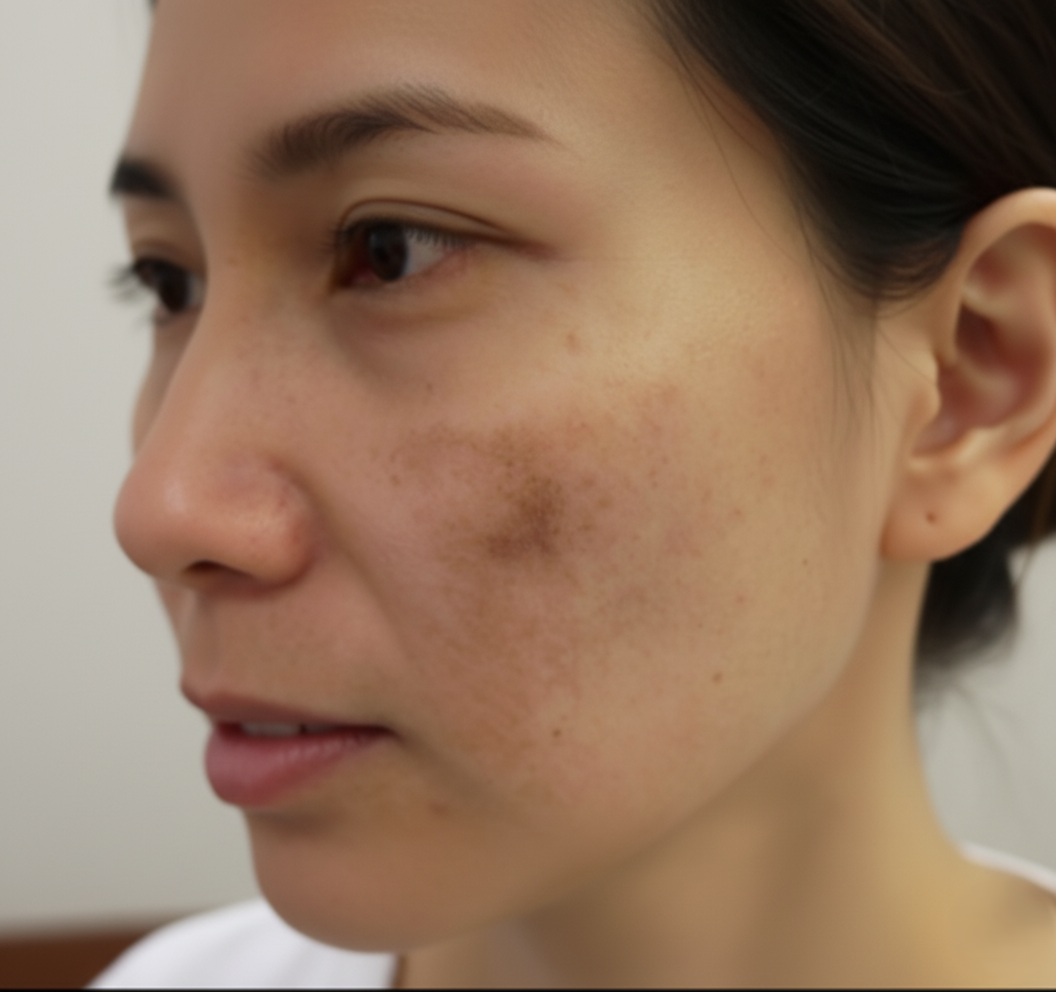
After a laser or chemical peel treatment, some people notice their skin turning darker or developing uneven brown patches. This is known as post-laser bronzing or post-peel post-inflammatory hyperpigmentation (PIH). Instead of getting the bright, clear skin they expected, the treated area looks tanned, patchy, or even more uneven than before. This can feel discouraging, especially when you’ve invested time and money into improving your skin.
What causes the problem?
This darkening happens because your skin is in a very sensitive state after laser or peel treatments. These treatments remove the upper layers of skin or trigger skin renewal, which makes the skin more vulnerable.
Several factors can trigger PIH or bronzing:
- Inflammation – The skin’s healing response may overproduce melanin (the pigment that gives skin its color).
- Sun exposure – Even small amounts of UV rays can trigger excess pigmentation on freshly treated skin.
- Skin type – People with medium to darker skin tones are more prone to PIH because their skin naturally produces more melanin.
- Improper aftercare – Not following post-treatment instructions, such as skipping sunscreen or using harsh products, can worsen pigmentation.
- Over-aggressive treatment – If the peel or laser setting was too strong for your skin type, it may trigger excessive irritation and pigmentation.
How to fix the problem
The good news is that post-laser bronzing or post-peel PIH is treatable. The key is patience, consistent care, and the right professional support. Here are steps to manage and improve the condition:
- Strict sun protection
Daily use of broad-spectrum sunscreen (SPF 30–50) is non-negotiable. Sunlight is the number one trigger for making pigmentation worse. - Gentle skin care
Stick to mild cleansers and soothing moisturizers. Avoid scrubs, harsh exfoliants, or products that sting. The goal is to calm the skin, not irritate it further. - Targeted treatments
Professional solutions like brightening facials, antioxidant serums, and light-based therapies can gradually fade pigmentation. Ingredients such as niacinamide, vitamin C, and tranexamic acid may help lighten PIH over time. - Consistency and patience
Pigmentation takes weeks to months to fade. The most important thing is not to give up or switch products too quickly. Consistency is what delivers results.
BeautyMau’s Recommendation
At BeautyMau, we understand how frustrating it can feel when a treatment meant to improve your skin seems to backfire. That’s why we designed special post-treatment recovery facials tailored for sensitive, healing skin.
Our top recommendation:
- SOS Recovery Treatment – calms skin sensitivity and reduces redness, preparing the skin to heal properly.
- Intensive Repair Solution – strengthens the skin barrier, prevents worsening of pigmentation, and supports recovery.
- DPL Clarifying Glow Treatment – gently targets pigmentation and uneven tone to bring back brightness without harsh irritation.
These treatments are gentle yet effective, designed not only to improve pigmentation but also to protect your skin from further damage.
Final Thought
Post-laser bronzing and post-peel PIH are common, but they don’t have to be permanent. With the right care, protection, and professional guidance, your skin can recover its brightness and clarity.
At BeautyMau, we don’t rush results—we support your skin step by step, so you can feel confident in your healing journey.
If you’re experiencing post-treatment pigmentation, our team is here to help you restore balance and glow safely.