
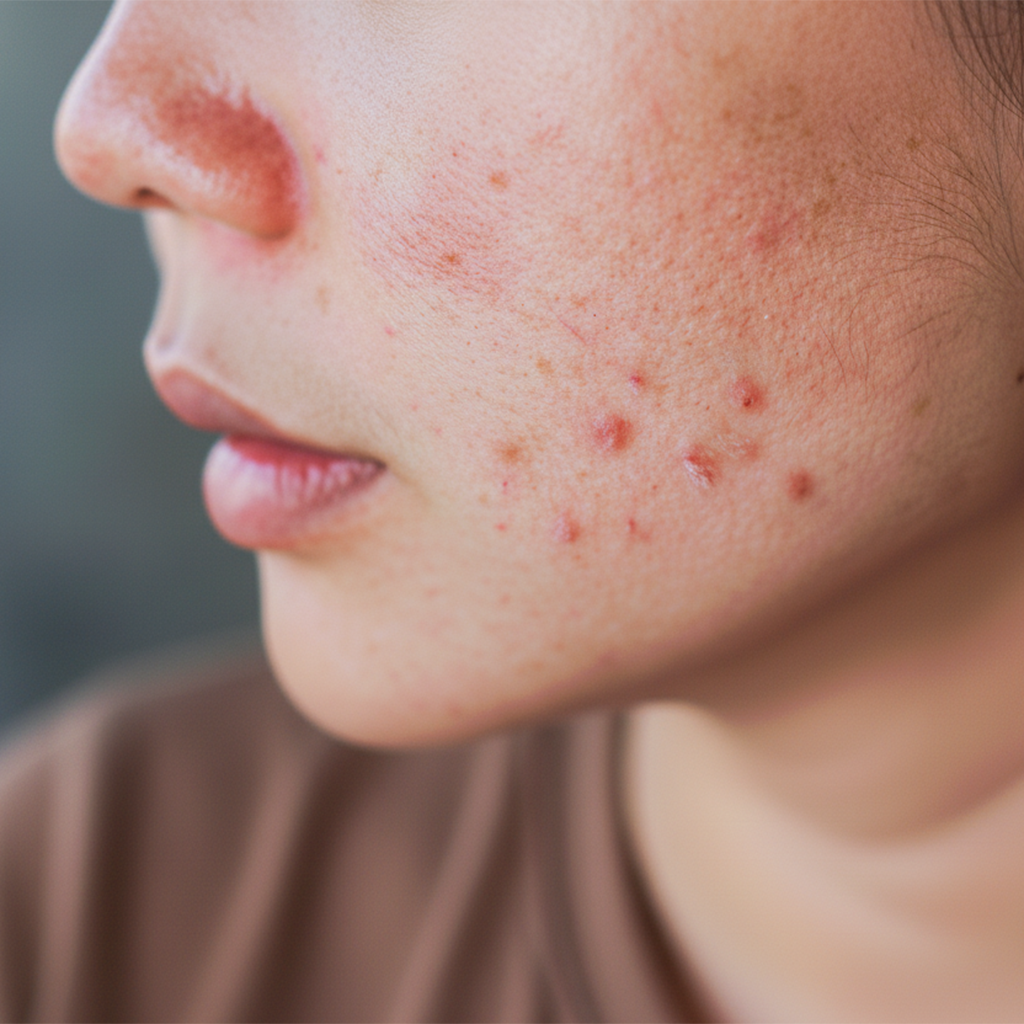
Retinoid Purging vs Irritation: How to Tell the Difference
When people start using retinoids (vitamin A skincare like retinol or tretinoin), one of the most confusing things that can happen is the breakout that follows. Is it just a purge (a sign your skin is adjusting) or is it irritation (a warning that something is wrong)? Let’s break it down clearly.
What’s the Problem?
Retinoids are famous for improving skin texture, reducing acne, and softening fine lines. But the first few weeks can be rough. Instead of glowing skin, you might see:
- New breakouts
- Redness
- Flaking or peeling
- Sensitivity
The challenge is knowing if this is temporary purging or harmful irritation.
What Causes the Problem?
Purging happens when retinoids speed up your skin cell turnover. Imagine your skin as a conveyor belt: clogged pores that would have appeared in the future are pushed to the surface quickly. This makes breakouts show up all at once, but it’s actually a sign the product is working.
Irritation, on the other hand, happens when your skin barrier is overwhelmed. This isn’t about bringing hidden clogs to the surface—it’s your skin screaming that it’s too much. Irritation shows up as:
- Burning or stinging
- Raw, red patches
- Persistent dryness
- Breakouts in new areas where you normally don’t get acne
How to Fix the Problem
If It’s Purging:
- Be patient: Purging usually lasts 4–6 weeks.
- Don’t quit too soon: Stopping too early means you miss out on long-term benefits.
- Support your skin: Use gentle cleansers, hydrating serums, and barrier creams.
If It’s Irritation:
- Cut back frequency: Instead of every night, try once or twice a week.
- Moisturize generously: A stronger barrier will calm your skin.
- Use the sandwich method: Apply moisturizer → retinoid → moisturizer to buffer the effect.
- Pause if needed: If your skin is too uncomfortable, stop and let it heal before reintroducing.
How to Tell the Difference Quickly
- Purging usually appears in areas you often break out (like chin, forehead, nose).
- Irritation shows up as redness, rash, or bumps in new places.
- Timeline matters: Purging should improve in a month or two. If it gets worse or spreads after that, it’s likely irritation.
A Smarter Way Forward
You don’t have to guess and struggle through this alone. At BeautyMau, we’ve seen many clients go through this confusing stage. Instead of giving up on retinoids, the key is to balance them with professional care that soothes the skin barrier while still keeping results on track.
That’s why we recommend
- SOS Recovery Treatment – Soothes redness, burning, and stinging caused by irritation.
- Intensive Repair Solution – Deeply repairs and nourishes the skin barrier, reducing dryness and sensitivity.
- Purifying Balance Treatment – Keeps pores clear and balanced during the purge phase, reducing clogged breakouts.
This treatment calms redness and irritation, strengthens your skin’s natural barrier, provides deep hydration to reduce flakiness, and helps you stay consistent with retinoids—so your skin adjusts smoothly and achieves the results you’re looking for.
Final Thoughts
Retinoid purging vs irritation can feel tricky, but once you know the difference, it’s easier to handle. Purging is a temporary storm before clear skin, while irritation is your skin’s way of saying “slow down.”
If you’re unsure or your skin feels uncomfortable, don’t wait. Book an SOS Recovery Treatment at BeautyMau and let our team guide your skin back to balance. With the right support, retinoids can be your best friend—not your worst nightmare.