
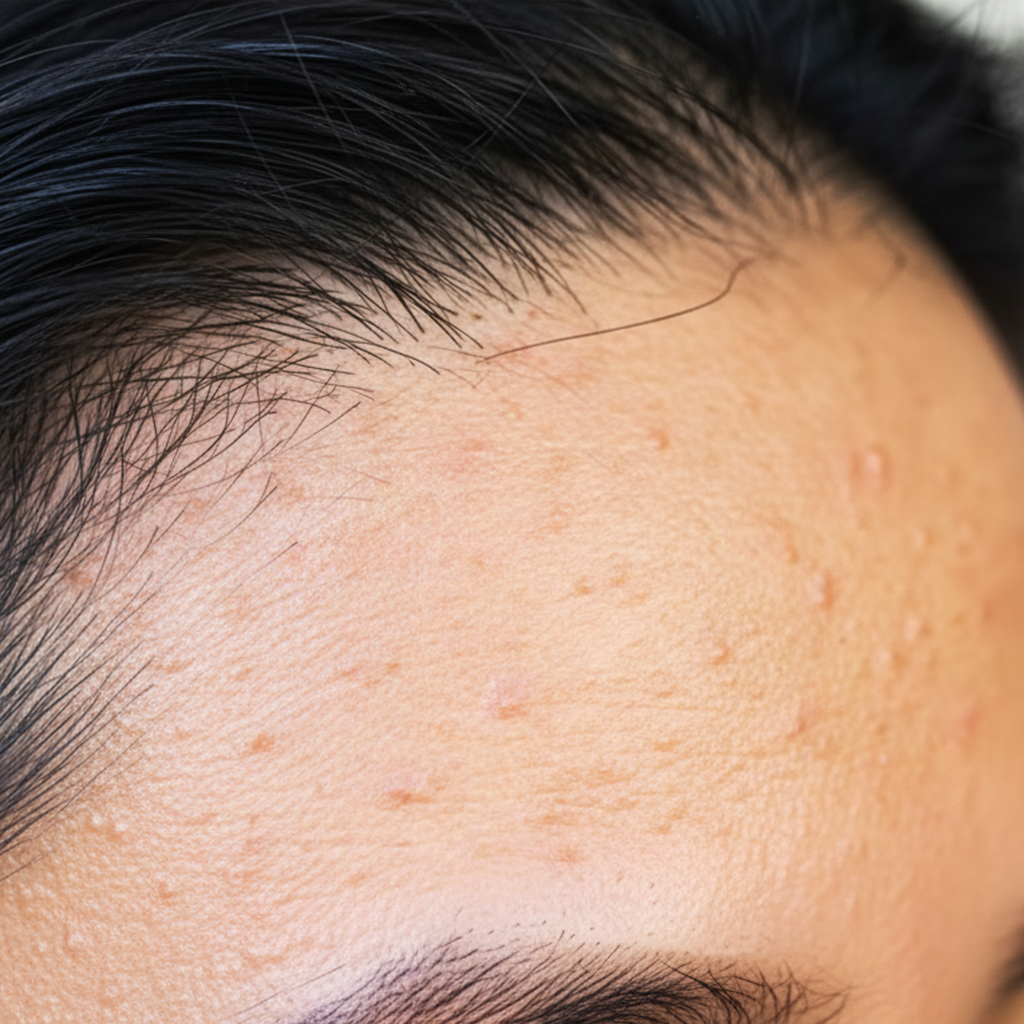
Keratosis Pilaris on the Face
What is Keratosis Pilaris?
Keratosis Pilaris (often called “KP” or sometimes “chicken skin”) is a harmless but frustrating skin condition. It shows up as tiny rough bumps, almost like small pimples, usually on the arms, thighs, or buttocks. But in rare cases, these bumps can appear on the face, especially on the cheeks.
When it’s on the face, KP can make the skin feel rough and uneven, and makeup doesn’t sit well. Even though it’s not painful or dangerous, it often makes people feel self-conscious because the skin doesn’t look smooth.
What Causes Keratosis Pilaris?
The bumps happen when the skin makes too much keratin, a natural protein that protects the skin. Instead of shedding normally, the keratin plugs up the hair follicles. This creates tiny bumps that feel a bit like sandpaper.
Several things can make KP worse:
- Dry or dehydrated skin – without enough moisture, keratin builds up.
- Genetics – it often runs in families.
- Skin barrier weakness – sensitive or eczema-prone skin may get it more.
- Weather changes – it often flares during colder, drier months.
When KP shows up on the face, it’s usually linked to skin sensitivity and clogged pores from keratin buildup.
How to Fix Keratosis Pilaris on the Face
Even though there’s no instant “cure,” KP can be managed and improved with the right approach. The goal is to unclog the blocked follicles and strengthen the skin barrier so bumps don’t keep coming back.
Here are the most effective methods:
- Gentle Exfoliation – Using mild exfoliants (like lactic acid, glycolic acid, or gentle enzyme peels) helps clear the keratin plugs without irritating the skin. On the face, this must be done carefully to avoid redness.
- Deep Hydration – Moisturizers with ingredients like urea, ceramides, or hyaluronic acid soften the bumps and keep skin smooth. Hydration is key to reducing the rough texture.
- Professional Treatments – Salon or clinic facials with gentle exfoliation tools, light therapy, or micro-resurfacing can improve skin texture much faster than home products.
- Consistency – KP doesn’t disappear overnight. Regular care over a few weeks to months brings the best results.
What You Should Avoid
- Harsh scrubs – physical scrubbing can make bumps worse.
- Over-exfoliating – too much acid or peeling can damage sensitive skin.
- Skipping moisturizer – dryness always makes KP look and feel worse.
BeautyMau’s Recommendation for Keratosis Pilaris on the Face
At 生活美容疗程, we understand how frustrating facial roughness can feel. Our treatments are designed to not only smooth the skin but also calm sensitivity so your skin looks healthier over time.
Recommended Service:
- Layered B-Tox Peel Treatment – softens rough patches and helps clear tiny bumps for smoother skin.
- Skin Balancing Microneedling – refines skin texture and improves absorption of soothing serums.
- Hydrapy Deep Restoration Treatment – deeply hydrates and repairs the skin barrier, keeping it healthy and soft.
Why it works for KP on the face:
- Targets rough keratin buildup safely
- Restores hydration and comfort
- Improves skin barrier strength
- Leaves skin feeling smooth and refreshed
With the right care, KP on the face can be managed and improved, leaving your skin looking smoother, clearer, and more radiant.
Final Thoughts
Keratosis Pilaris on the face may be rare, but it’s not something you have to “just live with.” With the right mix of gentle exfoliation, hydration, and professional care, those rough bumps can be smoothed out, leaving your skin soft and even again.
At 生活美容疗程, we believe every skin problem has a solution — and it doesn’t have to be stressful. If you’re struggling with small bumps on your cheeks or face, we’d love to help you find the right treatment plan so you can feel confident in your skin again.

