



Can Oily Skin Still Be Dehydrated? Here’s What Most People Get Wrong
Yes — your skin can be oily and dehydrated at the same time.
Oil and water are not the same thing.
Your skin may produce plenty of sebum and still lack adequate water. This can leave your face looking shiny while also feeling tight, uncomfortable, rough, or less healthy than usual.
And because the skin looks oily, many people respond by trying to remove even more oil.
That can make skincare increasingly confusing.
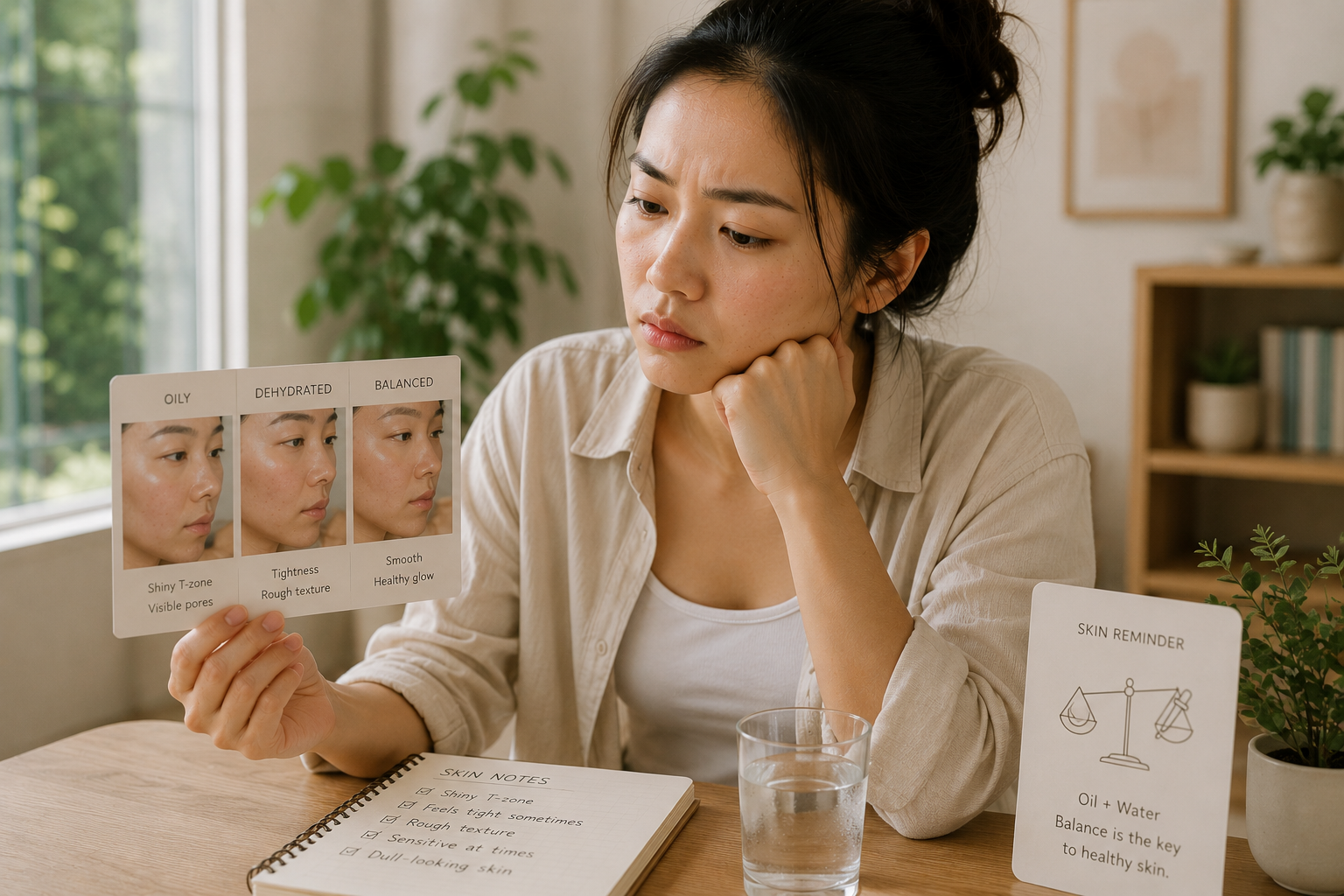
Oily Skin Doesn’t Always Mean Hydrated Skin
One of the biggest misunderstandings about oily skin is:
“If my face is oily, it must have enough moisture.”
But oiliness describes the amount of sebum on the skin, while dehydration refers to a lack of water in the skin.
This means you can experience both at once.
Signs may include:
- Shiny forehead, nose, or chin
- Skin feeling tight after cleansing
- Rough or uneven texture
- Makeup looking patchy despite oily areas
- Skin becoming oily quickly during the day
- Dull or tired-looking complexion
- Increased sensitivity or discomfort
This combination can be confusing because your skin appears oily but doesn’t necessarily feel healthy or comfortable.
Why Does Oily Skin Become Dehydrated?
There isn’t one single cause.
Several factors may contribute, including:
- Using cleansers that leave the skin feeling stripped or tight
- Over-exfoliating
- Not using enough suitable hydration
- Spending long hours in air-conditioned environments
- Hot weather and sweating
- Frequently changing skincare products
- A disrupted skin barrier
This is particularly relevant in Malaysia.
You may spend part of your day outdoors in hot and humid weather, then spend hours inside an air-conditioned office, shopping mall, car, or bedroom.
Your skin is constantly adapting to different environments.
The Common Mistake: Trying to Remove More Oil
When the face becomes shiny, the instinct is often:
Clean it more.
People may wash their face repeatedly, use stronger cleansers, skip moisturiser, or exfoliate more frequently.
But oily skin doesn’t need to be completely oil-free.
The goal should be maintaining a comfortable balance without unnecessarily irritating the skin.
If your skin feels tight immediately after cleansing but becomes shiny again later, simply using stronger oil-control products may not address everything that’s happening.
Why Hydration Still Matters for Oily Skin
Hydration doesn’t necessarily mean applying a thick or heavy cream.
The appropriate skincare depends on your skin condition, but oily skin still needs support in maintaining hydration and a healthy skin barrier.
Instead of focusing only on:
“How do I stop my skin from becoming oily?”
it can be more useful to ask:
“Is my skin oily, dehydrated, or experiencing both?”
That distinction can change the direction of your skincare routine.
Don’t Treat Every Shiny Face the Same Way
Two people may both have visibly oily skin but have very different underlying conditions.
One may primarily experience excess oil and congestion.
Another may have oily skin together with dehydration and sensitivity.
Someone else may experience oiliness, enlarged pores, and recurring breakouts.
This is why treating every shiny T-zone with the same routine doesn’t always produce the same outcome.
If visible pores are also becoming a concern, read Why Your Pores Look Bigger Than Before to understand the different factors that may affect pore appearance.
When Your Skin Keeps Changing, Look at the Pattern
Don’t judge your skin from one oily afternoon.
Instead, observe what happens repeatedly.
Ask yourself:
- Does my skin feel tight after cleansing?
- When does the oiliness become most noticeable?
- Does my skin also feel rough or dehydrated?
- Has it recently become more sensitive?
- Am I constantly changing products to control the oil?
- Do air-conditioning or long working days affect how my skin feels?
These patterns can tell you much more than simply labelling your skin as “oily.”
If you frequently change your routine whenever your skin behaves differently, you may also want to read If You’re Constantly Changing Products, This Might Be The Real Problem.
Start With Understanding Your Skin
Oily skin doesn’t automatically mean your skin needs stronger oil control.
And dehydration doesn’t automatically mean you need a heavier moisturiser.
What matters is understanding what combination of conditions your skin is experiencing right now.
A proper skin assessment can help distinguish between oiliness, dehydration, congestion, sensitivity, and other factors before deciding on the appropriate care direction.
If you’re unsure what your skin actually needs, Start With a Clear Skin Assessment explains why understanding the condition should come before choosing another product or treatment.
Final Takeaway
Your skin doesn’t have to fit neatly into one label.
It can be oily and dehydrated.
It can be oily and sensitive.
It can be oily in some areas and comfortable in others.
Instead of fighting every bit of shine, look at the bigger picture.
Healthy-looking skin is not about removing all oil. It’s about finding the right balance for your skin.