



Why Does Your Skincare Suddenly Sting When It Never Did Before?
You apply the same serum or moisturiser you’ve used for months.
But suddenly…
It stings.
Your first thought might be:
“Did this product suddenly become unsuitable for me?”
Maybe — but not necessarily.
Sometimes, the product hasn’t changed. Your skin condition has.
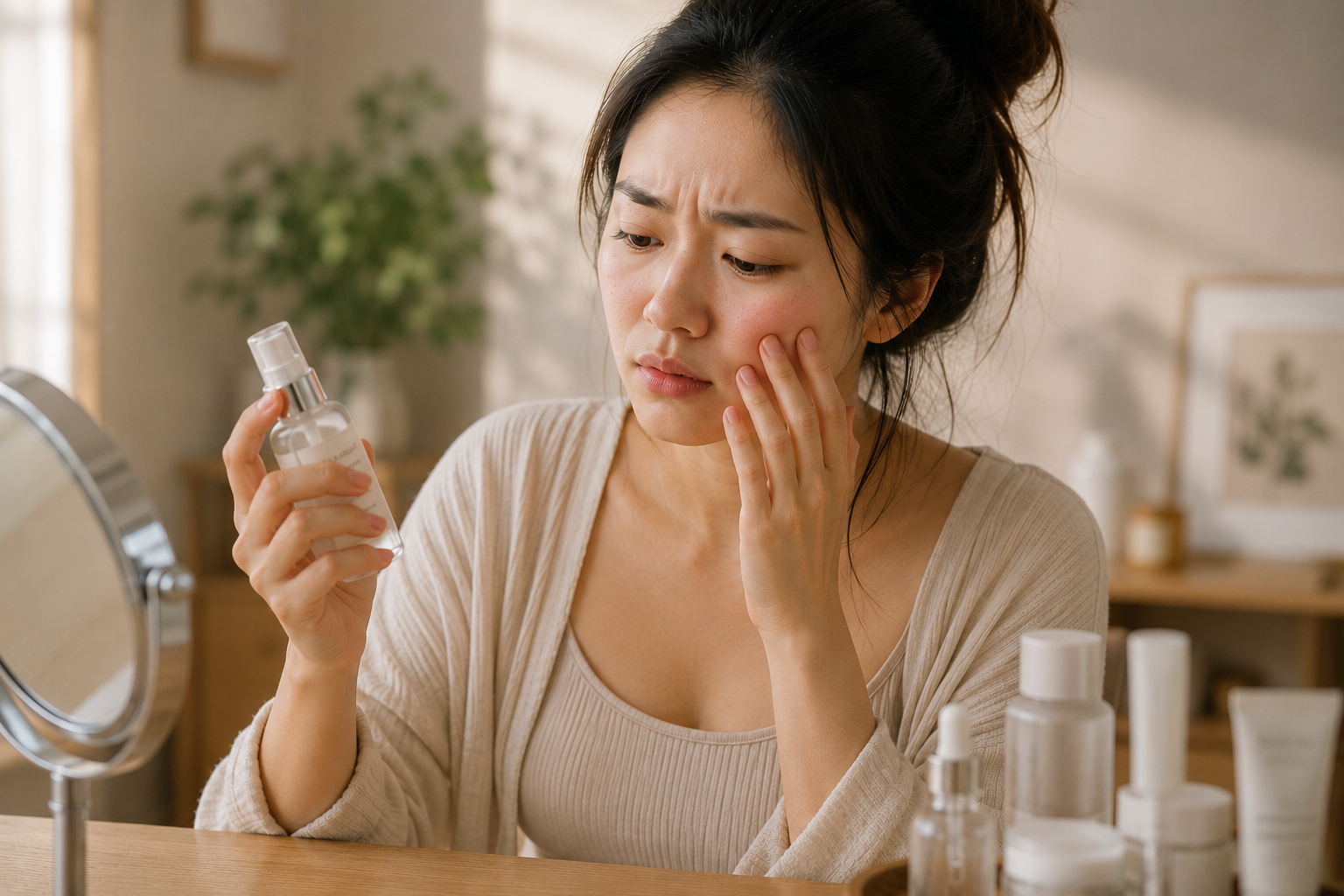
Why Can a Familiar Product Suddenly Sting?
Your skin isn’t in exactly the same condition every day.
Changes in your routine, environment, hydration, or skin barrier may affect how your skin responds to products.
Some common possibilities include:
- Over-exfoliation
- Dehydration
- Skin barrier disruption
- Using too many active ingredients
- Recent treatments
- Environmental changes
- Existing irritation or sensitivity
So before throwing away your entire skincare routine, it helps to look at what changed before the stinging started.
1. Your Skin Barrier May Be More Vulnerable
Your skin barrier helps protect the skin and reduce water loss.
When the barrier isn’t functioning as well as usual, products that previously felt comfortable may suddenly cause:
- Stinging
- Burning sensations
- Tightness
- Dryness
- Redness
- Increased sensitivity
This doesn’t automatically mean you have a “damaged skin barrier.”
But when several of these signs appear together, your skin condition deserves attention.
2. You May Be Using Too Many Active Ingredients
More skincare doesn’t always mean better skincare.
For example, your routine might include:
- Exfoliating acids
- Retinoids
- Vitamin C
- Acne treatments
- Brightening ingredients
- Scrubs or peeling products
Each product may be suitable when used correctly.
The problem can arise when too many potentially irritating products are layered or used too frequently for your skin’s current tolerance.
Your skin may have been coping before — until it wasn’t.
3. You Could Be Over-Exfoliating
When skin looks dull, oily, clogged, or rough, it’s tempting to exfoliate more.
But if exfoliation becomes excessive for your skin, you may start noticing:
- Increased sensitivity
- Dry or flaky areas
- Tightness after cleansing
- Redness
- Products suddenly stinging
This is why a sudden change in skin texture or sensitivity shouldn’t automatically be treated with another acid or scrub.
Sometimes the skin needs less, not more.
4. Dehydration Can Change How Your Skin Feels
Dehydrated skin may feel tight, uncomfortable, rough, or more sensitive than usual.
And here’s where people sometimes become confused:
Dehydrated skin doesn’t necessarily look dry.
You can have a shiny T-zone and still experience dehydration.
If your face becomes oily quickly but also feels tight or uncomfortable, our article Can Oily Skin Still Be Dehydrated? Here’s What Most People Get Wrong explains this combination in more detail.
5. Think About What Changed Recently
Instead of immediately asking:
“Which product is bad?”
ask:
“What changed before my skin started reacting?”
Think about the last few days or weeks.
Did you:
- Start a new skincare product?
- Increase exfoliation?
- Combine several active ingredients?
- Have a facial or other skin treatment?
- Spend more time in air-conditioning?
- Experience unusually dry or hot weather?
- Change your cleansing routine?
- Notice your skin becoming drier or more sensitive?
Sometimes the clue is not the product you’re applying right now.
It’s what happened to your skin beforehand.
Should You Keep Using a Product That Stings?
Don’t assume that stinging means a product is “working.”
A strong sensation isn’t proof of better results.
If a product repeatedly causes significant burning, redness, swelling, persistent discomfort, or worsening irritation, stop using it and consider getting appropriate professional or medical advice.
For mild, temporary sensitivity, simplifying your routine and avoiding unnecessary irritants may help while you observe how your skin responds.
The important thing is not to keep adding products to “fix” a reaction without understanding what’s happening.
Your Skin Can Change Even When Your Products Don’t
This is an important skincare lesson:
A product that suited you six months ago may not always feel the same today.
Your skin condition can change with your environment, routine, treatments, lifestyle, and other factors.
That’s why skincare shouldn’t be based only on:
“I’ve always used this.”
It should also consider:
“What condition is my skin in right now?”
You can read more about this in Why Your Skin Suddenly Becomes More Sensitive Than Before.
Understand the Reaction Before Changing Everything
When skincare suddenly stings, there are two mistakes to avoid:
- Ignoring the reaction and continuing everything as usual
- Panicking and replacing your entire skincare routine at once
Instead, look at the pattern.
What changed? When did it start? What else is your skin showing you?
Stinging together with dryness may tell you something different from stinging together with breakouts, redness, or recent over-exfoliation.
If you’re unsure what your skin is reacting to, Start With a Clear Skin Assessment explains why understanding your current skin condition should come before choosing another product or treatment.
Final Takeaway
If your usual skincare suddenly starts stinging, don’t immediately blame the product.
And don’t assume the sting means it’s working.
Your skincare may be the same while your skin condition has changed.
Pay attention to the other signs:
Stinging + tightness?
Stinging + redness?
Stinging + flaking?
Stinging after exfoliation?
Those details matter.
Because before deciding what to add, remove, or change, you first need to understand what your skin is trying to tell you.